Why Does Moissanite Sparkle So Much Compared to Diamond?
Put a moissanite and a diamond side by side in bright light and you may notice it immediately: the moissanite throws more colorful flashes. That vivid, rainbow-like effect is often what people mean when they ask about moissanite fire. But “sparkle” isn’t one single thing, and the difference between these stones is more interesting than “one is brighter.”
Whether you’re shopping for an engagement ring, rethinking tradition, or simply curious about what happens when light meets a gemstone, it helps to know what you’re seeing. Cut, lighting, setting, and personal taste all play a part. Cullen Jewellery engagement rings Here’s a plain-English guide to the stone sparkle differences—plus a few practical details worth considering before you fall for a particular look.
What Makes a Gemstone Sparkle?
When light enters a faceted gemstone, some of it reflects back toward your eye. The pattern and color of that light create the effects we commonly call sparkle. Jewelers often describe three parts:
- Brilliance: White light reflected back from the stone.
- Fire: Colored flashes created when white light separates into spectral colors, a bit like a tiny prism.
- Scintillation: The flashes you see as the stone or your hand moves. Think of the lively “on-off” glimmer across the facets.
These qualities interact, but they aren’t interchangeable. A stone can show a lot of rainbow color without necessarily appearing brighter in every setting. A well-cut diamond can return impressive white light, while a well-cut moissanite often shows especially noticeable fire. This distinction is at the heart of a useful brilliance comparison.
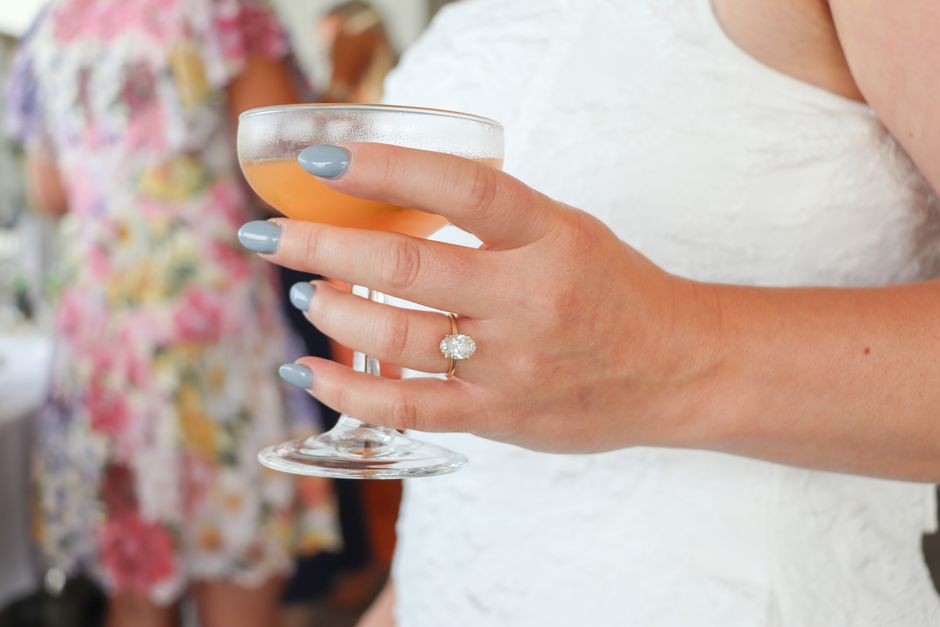
Why Moissanite Shows More Rainbow Fire
Moissanite disperses light more strongly than diamond. Dispersion is the gemstone property that separates white light into colors. Moissanite’s dispersion is commonly measured around 0.104, while diamond’s is around 0.044. In everyday terms, moissanite tends to produce more vivid, frequent rainbow flashes when light hits it at the right angle.
That doesn’t mean every moissanite looks like a disco ball. The strength of its color flashes depends on the cut, size, lighting, and how the stone is moving. A large stone in direct sun may show more obvious fire than a smaller one in soft indoor light. Some people love those lively flashes; others prefer the subtler look of diamond’s more restrained color dispersion.
Moissanite also has a higher refractive index than diamond—roughly 2.65 to 2.69 compared with diamond’s 2.42. Refractive index describes how strongly light bends as it passes through a material. The numbers help explain why the stones handle light differently, but they don’t tell you exactly how a ring will look on your hand. Cut proportions and lighting still matter a great deal.
Moissanite vs. Diamond: The Sparkle Differences at a Glance
Feature Moissanite Diamond Colorful fire Usually more pronounced rainbow flashes Often subtler colored flashes White-light return Can look bright, depending on cut and lighting Can show strong brilliance, depending on cut and lighting Movement sparkle May appear especially lively because of its fire Varies with cut; often admired for balanced light return Hardness About 9.25 on the Mohs scale 10 on the Mohs scale Best deciding factor Whether you enjoy bold, colorful flashes Whether you prefer diamond’s look, meaning, or material choiceUse this as a starting point, not a verdict. Two stones of the same material can look surprisingly different, and a poorly cut stone won’t show its best qualities just because it’s a diamond or moissanite.
Cut Can Change the Whole Impression
For both stones, cut has a major influence on how light moves through the gem. A skilled cut helps light return toward your eye instead of leaking out through the bottom or sides. The shape, facet arrangement, and proportions affect whether a stone looks bright, fiery, calm, or particularly lively.
Moissanite is also doubly refractive: light can split into two rays as it passes through the material. Depending on the stone’s orientation and viewing angle, this can create a slightly different visual effect, including a sense that facets appear doubled. It isn’t automatically a flaw, but it can be more noticeable in some cuts and larger stones. If you can, view a stone in person and turn it in your hand rather than judging it from one studio photo.
Lighting Matters More Than You Think
Jewelry-store spotlights are designed to make gems lively. Daylight, office lighting, candlelight, and the softer light at home can all make a ring look different. Ask to see a stone in more than one environment, or compare it by a window and in ordinary indoor light. A ring should make you happy outside the display case, too.
Choosing the Look You Want—Not the One You’re Supposed to Want
Engagement rings carry a lot of inherited rules: diamonds are the default, the center stone should be colorless, and the setting should look a certain way. But traditions are choices, not instructions. If moissanite’s energetic fire makes you smile, that is a perfectly good reason to consider it. If a diamond’s particular look or personal significance matters to you, that’s valid too.
Budget is part of this conversation, and it doesn’t have to make a proposal less romantic. A ring that fits your finances and feels right to wear is more meaningful than stretching your budget to satisfy someone else’s idea of what an engagement ring “should” cost. Companies such as Modern Gents offer accessible styles for shoppers who want to explore lower-cost options. As with any retailer, check the specifics of the stone, metal, warranty, and return policy before you buy.
For a wider range of designs, Lily Arkwright is one brand shoppers may encounter while exploring contemporary engagement rings and alternative stones. Compare the details across brands rather than relying on a product photo alone: stone type, measurements, setting materials, resizing options, and care instructions all matter.
Modern Settings and Silhouettes: A Practical Note
Moissanite works with classic solitaires, but it also suits modern silhouettes: east-west oval settings, geometric step cuts, asymmetrical side stones, low-profile bezels, and mixed-metal designs. A stone’s fire can feel especially expressive in a clean, architectural setting. Conversely, a halo or pavé band adds extra sparkle around the center, which may be wonderful—or may feel like too much if you prefer a quieter look.

Try the ring on, if possible. Notice how high the center stone sits and whether it catches on pockets, hair, or your favorite knits. I keep a running mental list of settings that snag sweaters; tall prongs are frequent contenders. A bezel or lower setting may be a better fit if you use your hands a lot or want a smoother profile.
And don’t skip the between-the-fingers test. Does the band feel comfortable beside another finger? Is it too wide, too sharp at the edges, or awkward when your hand closes? A ring can look perfect in a Pinterest photo and still feel wrong after a full day of wear.
Colored Gemstones as Storytelling
Moissanite and diamond aren’t the only choices. Sapphires, emeralds, spinel, and other colored stones can bring personal meaning into a ring through a favorite color, a family connection, or a place you love. Some couples choose a colored center stone and use small diamonds or moissanite as accents. Others pair a clear center stone with a colored hidden detail on the band.
Colored gemstones also shift the conversation from “Which stone is the standard?” to “What feels like us?” That could mean a deep green sapphire for someone who loves the outdoors, a warm champagne hue that recalls a meaningful trip, or a birthstone detail tucked beneath the setting. If you’re considering a softer or less commonly used gem, ask about durability and care. Beauty is important; so is knowing how a stone will handle everyday wear.
Bespoke Design and Customization
If you know what you like but can’t find it ready-made, bespoke design lets you shape the ring around your priorities. You might choose the center stone first, then settle on the setting, metal, band width, and details such as engraving or a hidden accent. Bespoke Bride regularly explores personal, less prescriptive approaches to weddings and style—an outlook that fits couples who want a ring with a story rather than a template.
Before commissioning a custom ring, gather inspiration and get specific about what matters. Save examples of stones, proportions, settings, and details you actually like—not just overall mood. Make Pinterest boards for ring inspiration, then add notes about what appeals to you in each image: the low profile, the open shoulders, the warm metal, or the way the center stone sits. This gives a jeweler useful direction without asking them to recreate someone else’s ring exactly.
Ask clear questions about the stone’s origin, the metal, the construction, and the maker’s process. A retailer should be able to explain what it sells and provide relevant documentation. If answers about sourcing are vague, ask again or consider another jeweler. Ethical shopping isn’t about finding a magically perfect supply chain; it’s about being able to make an informed choice.
- Choose the visual qualities you care about most: white brilliance, rainbow fire, color, or a particular shape.
- Set a comfortable budget before you start comparing stones.
- Try different sizes and settings, and check comfort between your fingers.
- Ask about sourcing, maintenance, resizing, warranties, and return terms.
- Make the final decision together if that feels right for your relationship.
So, Which One Should You Choose?
Moissanite usually shows more noticeable rainbow fire because it disperses light more strongly than diamond. Diamond can deliver a different balance of white Article source brilliance and colored flashes, but the exact look depends on the cut and the conditions in which you see it. There is no single winner in a brilliance comparison; there’s only the look you want to wear.
When you compare stones, watch them move in everyday light, ask how the setting feels, and give yourself permission to step outside tradition. Whether you choose moissanite, diamond, or a colored gemstone, the right ring is one that fits your hand, your values, and your life—not just a camera-ready moment.
And when the planning moves from the proposal to the party, keep the tools practical too: a Google Sheet for RSVPs can make guest tracking much less chaotic, especially when it’s linked from an invitations promo or wedding website. The same principle applies to ring shopping: a little organization can leave more room for the fun, personal decisions.